If you love the idea of living steps from some of Boston’s most iconic restaurants, historic streets, and waterfront views, the North End can feel hard to resist. But buying here is not just about charm. You also need to think clearly about noise, crowds, parking, and how your exact block can shape your day-to-day experience. This guide will help you weigh those tradeoffs so you can decide whether the North End fits your lifestyle and buying goals. Let’s dive in.
Why buyers choose the North End
The North End offers a living experience that is hard to duplicate anywhere else in Boston. According to Boston Planning, it is Boston’s oldest residential community and one of the city’s most visited neighborhoods, with a long-standing identity as Boston’s Little Italy.
That history shows up in daily life. The neighborhood feels compact, active, and highly walkable, with narrow streets, restaurant-lined ground floors, and easy access to the waterfront. If you want a home where you can step outside and immediately feel connected to the city, the North End often delivers that in a big way.
It also attracts a specific kind of buyer. Boston Planning data shows that 57% of residents are ages 20 to 34, and 80% have a bachelor’s degree or higher. In practical terms, many buyers are drawn here for an urban lifestyle centered on convenience, dining, and walkability rather than space or a car-focused routine.
What the housing stock looks like
If you are shopping in the North End, it helps to set expectations early. The housing stock is shaped by historic buildings, apartment-style living, and smaller unit footprints rather than large homes with extensive storage or outdoor space.
According to the 2017-2021 ACS neighborhood profile, the North End had 6,709 housing units, with 85.4% occupied. Of those occupied units, 24.8% were owner-occupied and 75.2% were renter-occupied.
Unit sizes also run compact. The same profile shows 40.0% of homes are studios or one-bedroom units, 37.6% are two-bedroom units, 9.4% are three-bedroom units, and only 3.8% are four-bedroom or larger. That means the neighborhood tends to work best for smaller households, buyers who prioritize location, or people willing to trade square footage for lifestyle.
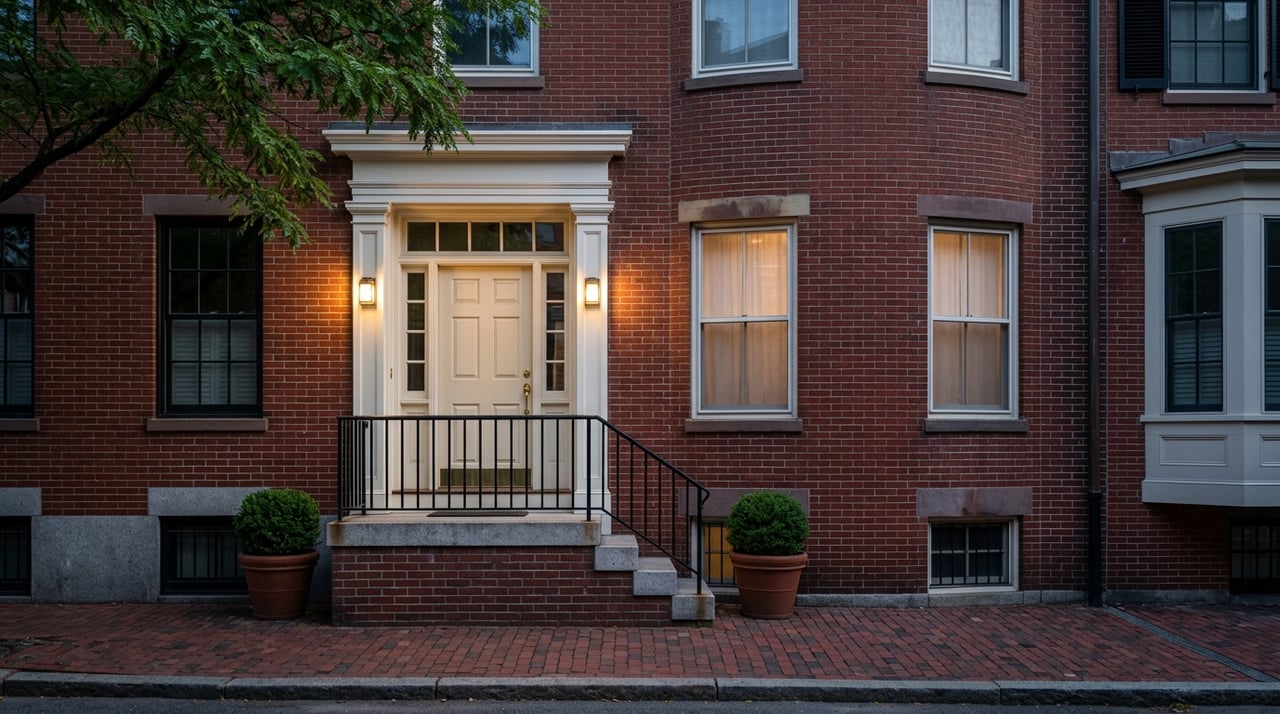
City planning materials describe the built form as largely historic brick apartment buildings and mid-rise brick-and-stone structures. Many buyers here end up choosing between condos and apartment-style homes rather than more traditional single-family options.
Nightlife is part of the package
For many buyers, the North End’s energy is the appeal. For others, it is the main caution flag. The truth is that both can be true at once.
Boston reported that the North End has about 95 restaurants in just over a third of a square mile, making it the densest restaurant concentration in Massachusetts. That kind of concentration creates a neighborhood with real buzz, especially around Hanover Street, Salem Street, and the waterfront edges.
The upside is obvious. You get unmatched access to dining, coffee, people-watching, and a lively street scene. The tradeoff is that you are buying into a place where activity is not occasional. It is built into the neighborhood’s daily rhythm.
The city’s 2024 outdoor dining rules for the North End also reflect that reality. Boston kept neighborhood-specific limits in place because of density, foot traffic, narrow streets and sidewalks, resident parking scarcity, accessibility concerns, noise, and public safety. For buyers, that is a useful signal that quality of life can vary meaningfully based on your exact location.
Feast season changes the feel
If you are considering the North End, it is worth understanding how the neighborhood shifts in summer. The North End is well known for its religious feasts and seasonal street activity, and that can be a major plus or a real adjustment depending on your preferences.
According to Boston’s coverage of North End feasts, weekends from the first Sunday in June through the second Sunday in September are filled with food, music, and dancing. For some buyers, that is exactly the kind of neighborhood culture they want to live inside.
For others, it may mean planning carefully around street closures, crowds, and sound levels. If you are serious about buying here, try to visit at different times of year, including a summer weekend, so you get an honest feel for the full lifestyle and not just a quiet weekday showing.
Block choice matters more than you think
In many neighborhoods, a few streets over does not make a huge difference. In the North End, it often does.
North End planning materials describe Hanover and Salem as the main commercial spines, while waterfront blocks add hotels, restaurants, and bars. A separate transportation study notes that there are no major through streets penetrating the neighborhood, that Commercial Street runs around the perimeter, and that Hanover Street is the commercial heart.
That helps explain why two homes only a short walk apart can feel very different. Main corridors and event routes usually offer the most convenience and energy, while interior side streets may feel calmer and more residential. If noise sensitivity matters to you, block-level analysis is essential.
When we help buyers evaluate urban neighborhoods, this is one of the most important practical steps. You are not just buying a unit. You are buying the sound profile, foot traffic pattern, and pace of the block outside your windows.
Parking is a real consideration
Parking is one of the biggest lifestyle filters in the North End. If you expect easy car ownership, this neighborhood can be challenging.
The city states that resident parking rules are designed to prevent long-term parking by non-residents, and on restricted streets, only vehicles with valid permits may park during posted times. Even with those rules, parking remains a frequent issue because the neighborhood is dense and curb space is limited.
The data show many households adapt by owning fewer cars. According to the ACS neighborhood profile, 52.7% of North End households have no vehicle, 34.8% have one vehicle, and only 0.9% have three or more vehicles.
That tells you something important as a buyer. The North End tends to work best if you are comfortable with a walk-first lifestyle, occasional driving, or paying a premium for features that make car ownership easier. If parking is essential, you should treat it as a major search criterion from day one.
Open space is limited, but access exists
The North End is rich in street life and waterfront access, but it is not a neighborhood known for abundant green space. That tradeoff matters if you want room to spread out outdoors.
City materials note that the neighborhood has relatively few open green spaces, but residents do have access to the Harborwalk, Christopher Columbus Park, Langone Park, Puopolo Playground, Mirabella Pool, bocce courts, and Steriti Ice Rink. So while the amount of space is limited, there are still places to get outside.
The difference shows up clearly in the numbers. Boston Community Preservation data estimates 67.7 square feet of open space per capita in the North End versus 392.8 citywide, even though 100% of residents had access to open space.
For buyers, this usually comes back to priorities. If you want immediate access to neighborhood activity and waterfront walks, the North End may check the box. If you need larger green spaces or a private yard, it may feel more limiting.
Which features matter most when buying
Because the North End asks buyers to balance charm with tradeoffs, the right property features can make a big difference in both daily comfort and future resale appeal.
Based on the neighborhood’s housing mix, parking limits, and compact urban form, buyers often place extra value on features that soften those tradeoffs. That can include:
- A quieter side-street location
- Private outdoor space
- Deeded or otherwise reliable parking access
- Elevator access in larger buildings
- Better storage than nearby competing units
- Layout efficiency in smaller square footage
These features matter because they are harder to find in this part of Boston. In a neighborhood where walkability and restaurant access are already built in, the homes that stand out are often the ones that add a little more ease to everyday life.
How to judge fit before you buy
The North End can be a great fit, but only if you are honest about how you want to live. It helps to think beyond finishes and ask whether the neighborhood’s pace matches your daily habits.
You may be a strong fit if you value:
- Walkability over square footage
- Dining and street life over quiet seclusion
- Historic character over newer-building uniformity
- Waterfront access over large green space
- Urban convenience over easy parking
You may want to think more carefully if you need:
- Consistently quiet evenings
- Frequent car use and simple parking
- Large rooms or flexible household space
- More private outdoor space
- Distance from tourist activity or seasonal crowds
The goal is not to talk you into or out of the North End. It is to help you buy with clarity. In a neighborhood this specific, self-awareness is one of the best tools you have.
Buying smart in the North End
A good North End purchase is usually not about finding a perfect, no-tradeoff property. It is about choosing the tradeoffs that fit you best.
That means looking closely at the block, building style, layout, and convenience factors that will shape your routine after closing. It also means thinking ahead to resale. In a neighborhood that already offers built-in charm and walkability, details like quieter positioning, parking, elevator access, and private outdoor space can help a property remain competitive over time.
If you are considering a purchase in the North End, working with an advisor who understands both the neighborhood’s lifestyle appeal and its practical constraints can help you make a smarter decision. If you want a clear, concierge-level strategy for buying in Boston’s most character-filled neighborhoods, connect with Mike Preston for tailored guidance.
FAQs
Is the North End in Boston a good fit for buyers who want quiet living?
- The North End can work for some buyers who want a calmer home base, but block choice matters a lot because main commercial streets and feast routes tend to feel busier than interior side streets.
What types of homes are most common in the North End, Boston?
- Most buyers will find condos and apartment-style homes in historic brick or mid-rise buildings, with a housing mix that leans heavily toward studios, one-bedroom, and two-bedroom units.
How difficult is parking for North End homeowners?
- Parking can be challenging because of dense development, limited street space, and resident permit rules, so buyers who need a car should evaluate parking options very carefully.
Does the North End, Boston have enough outdoor space for residents?
- The neighborhood has less open space per person than Boston overall, but residents do have access to the Harborwalk and several public spaces such as Christopher Columbus Park and Langone Park.
Why does block location matter so much when buying in the North End?
- Block location affects noise, foot traffic, convenience, and overall feel, with main corridors and waterfront areas often offering more activity while interior side streets may feel more residential.
What property features can help resale value in the North End, Boston?
- Features that may help a home stand out include quieter positioning, private outdoor space, parking access, elevator service, and efficient layouts that make smaller square footage feel more functional.