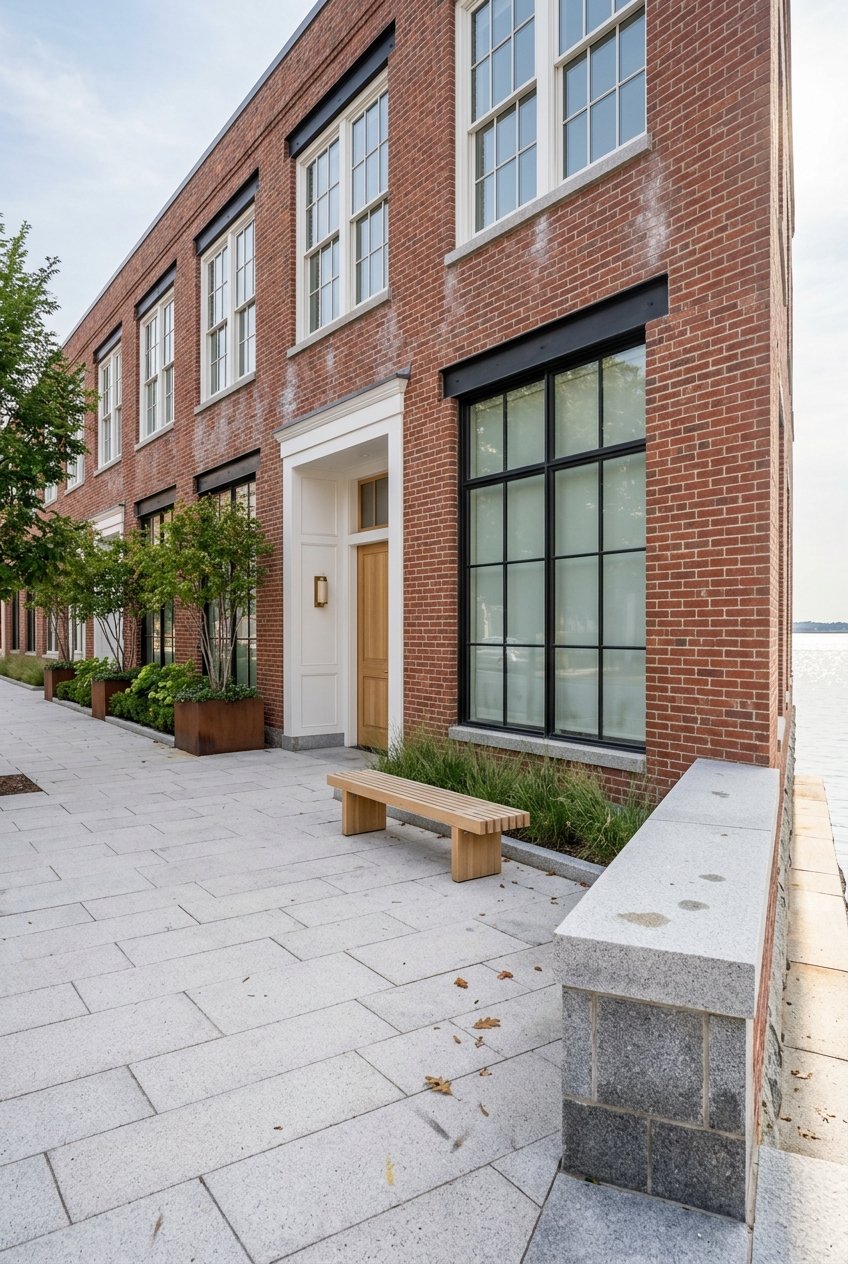
Living by the water in Boston sounds idyllic, but every neighborhood delivers that experience a little differently. If you are considering Charlestown’s Navy Yard, you are probably wondering what daily life actually feels like once the views become routine and the weekend visitors go home. This guide walks you through what to expect from housing, commuting, outdoor space, errands, and overall lifestyle so you can decide whether the Navy Yard fits how you want to live. Let’s dive in.
What Makes the Navy Yard Distinct
Charlestown’s Navy Yard sits on Boston’s inner harbor, along the southern edge of Charlestown and just north of Downtown Boston. It blends preserved shipyard buildings, parkland, housing, and private development, which gives the area a very different feel from a typical city neighborhood.
This is not a place that feels generic or newly built from scratch. The setting is shaped by maritime history, public waterfront access, and adaptive reuse, creating a neighborhood where historic structures and modern living exist side by side.
Housing in the Navy Yard
Condos, apartments, and adaptive reuse
If you picture everyday living here, think waterfront condominiums and apartments more than traditional single-family homes. The housing mix leans urban and compact, with many residences tied closely to the former shipyard setting.
That setting matters because it gives the neighborhood its character. Instead of a standard apartment district, the Navy Yard often feels defined by preserved buildings, brick facades, and repurposed historic spaces.
Historic character with modern interiors
One of the most interesting features of the area is how older structures have been adapted for current use. In the Historic Monument Area, private lessees can renovate interiors while preserving exterior character, which helps explain why some buildings look deeply historic outside while functioning as modern homes or offices inside.
A clear example is the Ropewalk and Tarring House redevelopment, which the city approved as a 90-unit residential project completed in 2021. That project reflects a broader pattern in the Navy Yard: historic shells, updated living spaces, and a built environment that keeps evolving.
A neighborhood still changing
The Navy Yard is not frozen in time. Boston planning actions in 2025 moved forward redevelopment at Pier 5 and a Little Mystic Channel Harborwalk extension, reinforcing that this is an active residential neighborhood with continued public-space and development activity.
For you as a buyer or renter, that means the area offers both established character and ongoing change. It can feel polished and historic, but it is also still growing into its next chapter.
Daily Routine on the Waterfront
Harborwalk access and open space
One of the biggest lifestyle draws here is easy access to the waterfront. The Boston Harborwalk runs through Charlestown as part of a nearly 40-mile public waterfront walkway, connecting people to the harbor and to the city’s wider open-space network.
In the Navy Yard, that translates into a daily routine with real outdoor options close to home. You can walk through Shipyard Park, spend time near the Korean War Memorial, or head toward the piers for harbor views and fresh air.
Historic surroundings on everyday walks
Few Boston neighborhoods offer this level of day-to-day historic context. The Navy Yard is home to the USS Constitution, USS Cassin Young, the visitor center, and the USS Constitution Museum, so even a casual walk can feel tied to the city’s past.
That does not mean the area feels like a museum district where nothing happens. It means your regular route may include nationally recognized landmarks, open green spaces, and skyline views that make ordinary routines feel a little more memorable.
Getting Around Without a Car
Transit and ferry options
The Navy Yard works well for people who do not want to depend on a car every day. According to the National Park Service, North Station is about a 15-minute walk away, which gives you a useful connection point for broader city travel.
The Charlestown Navy Yard Ferry is another practical option. From Long Wharf, the ride takes about 10 minutes, runs seven days a week when weather allows, and operates every 15 minutes during rush hour and every half hour during off-peak times and weekends.
Bus access and driving realities
Bus 93 also serves the Constitution Road stop, adding one more layer of transit access. Taken together, the ferry, bus service, and walk to North Station make the neighborhood function best for people comfortable mixing walking and public transportation into their routine.
Parking does exist, but the area is better understood as transit-first rather than car-first. If you drive regularly, that may be manageable, but the neighborhood’s strongest lifestyle advantage comes from using the city around you instead of relying on a vehicle for every trip.
Errands, Dining, and Practical Convenience
What is nearby
The Navy Yard offers scenic access and recreation more than a full retail district. For many day-to-day needs, the broader Charlestown neighborhood carries the load, especially around Main Street and City Square, where the city points to shops and restaurants.
Charlestown also includes amenities such as two marinas, the Warren Tavern, a pool, tennis courts in the Navy Yard, and the Charlestown Working Theater. That gives you a mix of practical and leisure options nearby, even if they are not all immediately outside your front door.
What to keep in mind about errands
If you want a neighborhood where you can step outside and check off every errand within a block or two, the Navy Yard may feel limited. Boston planning materials identify a grocery store as a community need in Charlestown, which suggests the immediate errand base is not as robust as the waterfront experience.
That does not make the area inconvenient for everyone. It simply means you are often trading all-in-one retail convenience for harbor access, open space, and a more distinctive residential setting.
Who Usually Loves Living Here
A strong fit for certain lifestyles
The Navy Yard tends to appeal to buyers and renters who want a compact waterfront lifestyle with strong transit links, green space, and visible history. It is especially compelling if you are drawn to condo living, adaptive-reuse buildings, and harbor views.
You may also appreciate the neighborhood if your ideal routine includes walks along the water, ferry rides, and quick access to Downtown Boston without living in the middle of its busiest streets. For many people, that balance is the real value.
When another neighborhood may fit better
The Navy Yard may be a less obvious match if your top priority is a broad walk-everything retail scene right outside your building. If you want a dense mix of grocery options, shopping, and daily services at your doorstep, you may find yourself leaning on the rest of Charlestown or downtown Boston more than expected.
That is why this neighborhood works best when you value setting and atmosphere as much as pure convenience. The lifestyle here is highly specific, and for the right person, that is exactly the appeal.
What Buyers and Renters Should Notice
Before you make a move, it helps to think beyond the listing photos. In the Navy Yard, your experience of the neighborhood may depend on how often you use transit, how much you value waterfront open space, and how comfortable you are handling some errands outside the immediate area.
You should also pay attention to building type and setting. Because the area includes both preserved historic structures and newer residential options, one property can deliver a very different everyday feel from another, even within the same neighborhood pocket.
If you are buying, this is where local guidance matters. A home here is not just about square footage or finishes. It is also about how the building fits into the Navy Yard’s mix of history, access, and evolving waterfront development.
For renters, the same idea applies. The best fit often comes from matching your routine to the neighborhood’s rhythm, not just choosing the nicest unit online.
If you are weighing a move to Charlestown’s Navy Yard and want practical, neighborhood-specific guidance, Mike Preston can help you evaluate the lifestyle, building options, and market realities with a concierge approach tailored to your goals.
FAQs
What is everyday life like in Charlestown’s Navy Yard?
- Everyday life in Charlestown’s Navy Yard centers on waterfront walks, historic surroundings, condo and apartment living, and easy access to transit, while some errands are often handled in broader Charlestown or downtown Boston.
What types of homes are common in Charlestown’s Navy Yard?
- Charlestown’s Navy Yard is known mainly for waterfront condominiums, apartments, and adaptive-reuse residential buildings rather than traditional single-family housing.
Is Charlestown’s Navy Yard good for commuting into Boston?
- Yes, Charlestown’s Navy Yard offers useful commuting options, including a roughly 15-minute walk to North Station, the Charlestown Navy Yard Ferry to Long Wharf in about 10 minutes, and Bus 93 service at Constitution Road.
Can you live in Charlestown’s Navy Yard without a car?
- Many residents can manage daily life in Charlestown’s Navy Yard without a car because the neighborhood is set up to work well with walking, ferry access, bus service, and nearby transit connections.
Are errands easy in Charlestown’s Navy Yard?
- Errands in Charlestown’s Navy Yard can be more limited than in a retail-heavy neighborhood, so residents often rely on Main Street, City Square, and other parts of Charlestown for shops and restaurants.
Who is Charlestown’s Navy Yard best suited for?
- Charlestown’s Navy Yard is often a strong fit for buyers and renters who want a compact waterfront lifestyle, historic character, park access, transit convenience, and condo-style living.