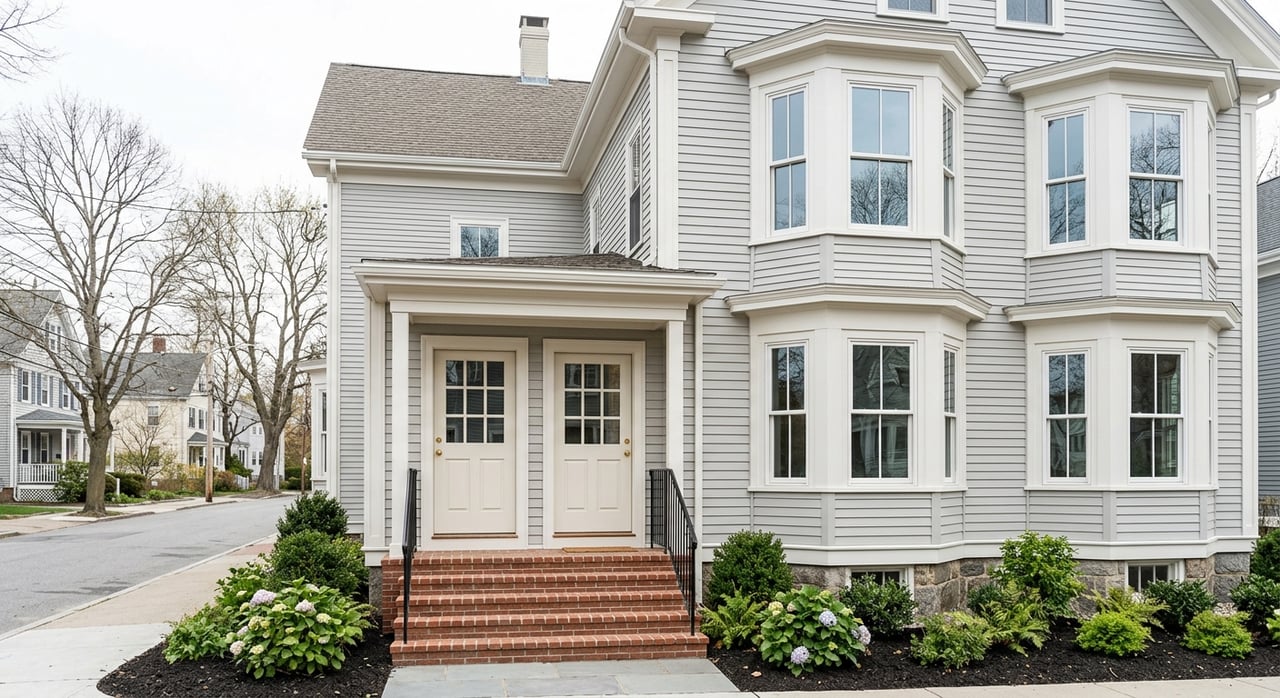
Thinking about buying in Cambridge but feeling priced out by the monthly payment? A live-in multifamily can change the math. If you buy a 2- or 3-family, live in one unit, and rent the others, you may be able to offset a meaningful share of your housing cost while building long-term equity. In this guide, you’ll see why Cambridge is one of Greater Boston’s strongest markets for house hacking, what the numbers can look like, and what practical issues to plan for before you buy. Let’s dive in.
Why Cambridge Fits House Hacking
Cambridge has several traits that make live-in multifamily ownership stand out. The city has a large renter base, strong student demand, and a housing stock that includes a meaningful number of 2- and 3-family homes. City data show that 66.5% of occupied housing units are renter-occupied, while 2-unit buildings make up 11.9% of housing units and 3-unit buildings make up 10.5%.
That matters because house hacking works best where rental demand is deep and consistent. In Cambridge, you are not relying on a thin tenant pool. You are buying in a city where renting is already a major part of the housing landscape.
Renter Demand Stays Strong
Cambridge benefits from a large college and graduate student population, along with a sizable daytime population. The city estimates 29,861 Cambridge residents are enrolled in college or graduate school, and its 2025 Town Gown Reports show 14,920 students living in dormitories in Cambridge. Harvard reports 24,519 students, and MIT reports 11,816 students.
This does not mean every renter is a student, and you should never build a plan around one tenant type alone. What it does mean is that Cambridge has steady housing demand from people who want to live close to campuses, jobs, and transit.
Transit Adds Flexibility
Transit access can make a real difference when you own a multifamily. The City of Cambridge says there are 27 MBTA bus routes, one commuter rail station, and 6 stations on the MBTA Red and Green Lines. It also notes that most of Cambridge is within a short walk of public transit.
For a house hacker, that can support a broader renter pool and help reduce vacancy risk. A property with strong transit access may appeal to more renters and roommates than a similar property on a less connected block.
What Rents Can Potentially Offset
Cambridge’s published rent figures are useful benchmarks, but they need context. The city’s 2025 Q3 median asking rents for market-rate units were $2,785 for a 1-bedroom, $3,400 for a 2-bedroom, and $3,900 for a 3-bedroom apartment. These are asking rents for market-rate units only, not affordable housing or university-controlled properties.
That means the citywide numbers are a starting point, not a guarantee. Your actual rent can vary based on unit condition, layout, location, and proximity to major campuses or transit.
Two-Family Example
If you buy a two-family, live in one unit, and rent the other at the city’s median 2-bedroom asking rent of $3,400 per month, that would equal about $40,800 in gross annual rent. That is a meaningful offset to ownership costs.
Still, gross rent is not the same as net cash flow. You would need to account for repairs, vacancy, insurance, taxes, and your mortgage payment.
Three-Family Example
If you buy a three-family, occupy one unit, and rent the other two at the city’s median 2-bedroom and 1-bedroom asking rents, the gross rent would be about $6,185 per month. That works out to roughly $74,220 per year in gross rent.
A setup like this can create a stronger monthly offset than a two-family. But it also usually comes with a larger purchase price, more building systems to maintain, and more landlord responsibilities.
Roommates in Your Unit
Some buyers also plan to bring in roommates within the unit they occupy. That may help your personal monthly budget, but you should be careful not to assume that income will count for mortgage qualification.
Fannie Mae generally does not allow income from the unit you live in to be used for qualifying, except in limited boarder-income or ADU situations. In other words, roommate income may help you in real life, but your lender may not treat it the same way on paper.
Financing Basics for Cambridge Buyers
The appeal of house hacking is simple: owner-occupant financing is often more accessible than investor financing. But in Cambridge, the challenge is often less about the loan type and more about the amount of cash you need at local price points.
For many buyers, the common paths are FHA or conventional financing. FHA can go as low as 3.5% down on 1- to 4-unit properties. For a 2- to 4-unit principal residence, Fannie Mae says a borrower generally needs a 5% minimum borrower contribution from personal funds when the loan-to-value ratio is above 80%, though HomeReady can allow a 3% borrower contribution in some eligible 2- to 4-unit cases.
Closing Costs Matter Too
Your down payment is only part of the picture. Closing costs are separate and typically run about 2% to 5% of the purchase price. Mortgage insurance is also usually required if your down payment is under 20% on most conventional loans, and FHA loans also require mortgage insurance.
This is where buyers can get surprised. A house hack may lower your long-term monthly cost, but the upfront cash needed can still be substantial.
Cambridge Price Points Raise the Bar
Using Cambridge’s 2024 median sale prices, a 5% borrower contribution would be about $77,125 on a two-family and about $91,125 on a three-family before closing costs. That helps explain why house hacking in Cambridge often works best for buyers with strong income, solid reserves, or outside help with closing costs.
This is one of the biggest reality checks in the market. The strategy can be smart, but it still requires enough financial cushion to buy well and handle the property responsibly.
How Lenders View Rental Income
One of the biggest benefits of a live-in multifamily is that rent from the non-owner-occupied units may help you qualify. Fannie Mae allows rental income from the units you will not occupy in a 2- to 4-unit principal residence to be considered in many cases.
Lenders often use leases or market rents, but they may apply a 75% factor to the gross rent to account for vacancy and maintenance. That means the full rent is not always counted dollar for dollar in underwriting.
This is why careful pre-approval matters. Before you start shopping, you want to understand how a lender will calculate rental income, what documents they will need, and what reserve requirements may apply.
Cambridge Tax Details to Know
If you plan to live in the property, Cambridge’s residential exemption can make a noticeable difference. The city’s FY26 residential tax rate is $6.67 per $1,000 of assessed value, and the residential exemption is 30% for owner-occupied homes.
Ownership and occupancy are determined as of January 1, and the application is due by April 1. In the city’s FY26 example, that 30% exemption equals $510,208 of exempted value and about $3,403 in tax savings for the average owner-occupied residential parcel.
Two- and Three-Family Tax Examples
The city reports that the FY26 median tax bill, including the residential exemption, is $7,594 for a two-family and $9,395 for a three-family. With the CPA surcharge, those figures rise to $7,802 and $9,657.
When you compare options, taxes should be part of your full ownership picture. A higher-rent property may still feel less attractive if taxes, repairs, and capital needs are materially higher.
Why Cambridge Assistance May Not Fit
Some first-time buyers look for local purchase assistance programs. In Cambridge, it is important to know that the city’s HomeBridge program is limited to single-family homes or condos.
That means it generally does not fit a 2- or 3-family house-hack purchase. If you are targeting a live-in multifamily, you will usually need to build your plan around standard owner-occupant financing rather than this specific city program.
Practical Risks to Plan For
House hacking can be a powerful strategy, but it also means becoming an owner-occupant landlord. In Cambridge, that often includes older housing stock, ongoing maintenance, and legal responsibilities that deserve careful attention.
A smart purchase is not just about finding enough rent to make the payment look better. It is about buying a property you can manage confidently and maintain properly.
Fair Housing and Property Standards
Massachusetts law prohibits housing discrimination based on race, color, national origin, religion, sex, familial status, disability, source of income, and other protected characteristics. State guidance also says landlords must provide safe, well-maintained housing that complies with the Sanitary Code.
For you, that means tenant screening, lease practices, and property operations should be handled carefully and consistently. Good systems matter just as much as a good pro forma.
Security Deposits Have Rules
Massachusetts allows landlords to collect first month’s rent, last month’s rent, and a security deposit. But the security deposit must be held in a separate, interest-bearing Massachusetts bank account.
This is not an area to handle casually. If you are buying your first multifamily, it helps to understand the operational side of landlording before your first lease starts.
Lead Paint Is a Real Issue
Many Cambridge homes were built before 1978, so lead paint can be a serious concern. Massachusetts lead law requires lead hazards to be removed or controlled if a child under 6 will live in the unit, and Cambridge’s local lead-safety guidance echoes that warning.
For multifamily buyers, this is one of the most important due diligence items in older housing stock. If a property has not been addressed properly, the cost and logistics can affect both your budget and your rental plan.
No Cambridge Rent Control
Massachusetts generally prohibited cities and towns from enacting rent control in 1995, and Cambridge does not appear on the Attorney General’s current list of rent-control municipalities. In practical terms, that means rent levels are shaped by your lease terms, market conditions, and state landlord-tenant law rather than a city rent cap.
That may offer more pricing flexibility than some buyers expect. Even so, lease structure, unit condition, and tenant retention still have a major effect on your long-term results.
What a Smart Cambridge Plan Looks Like
In Cambridge, the main question usually is not whether tenants exist. The bigger question is whether you can comfortably carry the purchase, document rent in a way your lender will accept, and manage the maintenance and legal obligations that come with an older multifamily property.
That is where practical underwriting matters. You want to look beyond the headline rent number and test the property against taxes, insurance, vacancy, repairs, and reserves.
For many buyers, the best opportunities are the ones that balance location, transit access, stable rental appeal, and manageable building complexity. A two-family may feel simpler to operate, while a three-family may create a stronger rent offset. The right fit depends on your budget, risk tolerance, and willingness to take on active ownership.
If you are considering a live-in multifamily in Cambridge, it helps to work with someone who can evaluate both the day-one numbers and the property’s longer-term upside. Reach out to Mike Preston for a concierge consultation on Cambridge house-hacking opportunities.
FAQs
What makes Cambridge a strong market for house hacking?
- Cambridge has a large renter base, strong student and workforce housing demand, extensive transit access, and a meaningful supply of 2- and 3-family homes.
How much rent can a Cambridge two-family potentially bring in?
- Using the city’s 2025 Q3 median asking rent, one rented 2-bedroom unit could generate about $3,400 per month in gross rent, or about $40,800 per year.
How do lenders treat rental income on a Cambridge live-in multifamily?
- Lenders may allow income from the non-owner-occupied units to help with qualification, and they often apply a 75% factor to gross rent for vacancy and maintenance.
Does Cambridge offer first-time buyer help for multifamily house hacking?
- Cambridge’s HomeBridge program is generally limited to single-family homes and condos, so it usually does not apply to a 2- or 3-family house-hack purchase.
What taxes should an owner-occupant expect on a Cambridge multifamily?
- For FY26, the city reports median tax bills with the residential exemption of $7,594 for a two-family and $9,395 for a three-family, before adding the CPA surcharge figures noted by the city.
What legal issues matter most for Cambridge house hackers?
- Key issues include fair housing compliance, Sanitary Code obligations, proper security deposit handling, and lead paint rules in older homes.