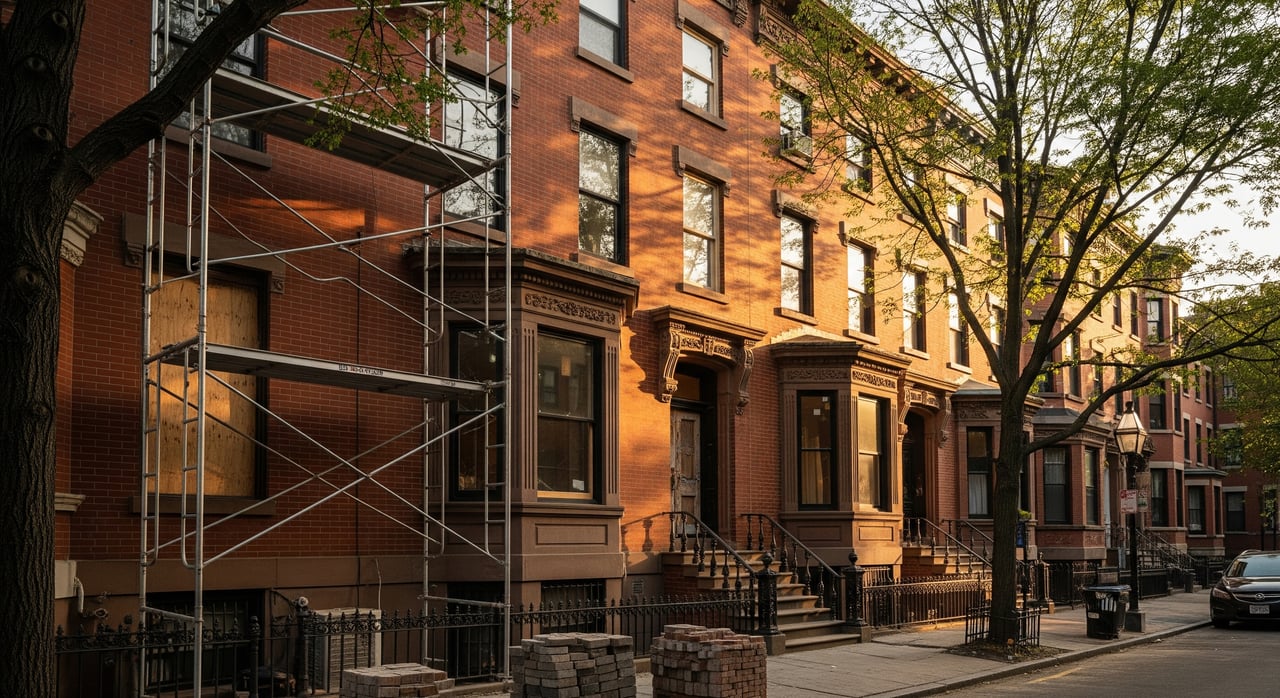
Thinking about swapping out windows, repainting trim, or fixing that brownstone stoop on your South End condo? In this neighborhood, anything the public can see comes with extra rules. You want to protect value, move fast, and avoid red tape. This guide shows you how the historic commission, condo board, and city permits fit together, so you can plan your timeline, budget, and vendors with confidence. Let’s dive in.
What triggers historic review
If work is visible from a public way, you should expect historic review in the South End Landmark District. This is true whether you are renovating before listing or fixing up after a purchase.
Changes that need review
- Window or door replacements and alterations, including frame profiles and muntin patterns.
- Stoop, balcony, railing, and front step work, including masonry and iron changes.
- Façade work such as brick repointing, patching, or cornice repair. Many districts restrict painting original brick.
- Masonry and brownstone repairs or replacement of decorative features.
- Roofline changes, dormers, or visible rooftop equipment.
- Porches, fences, and front yard hardscape visible from the street.
- Signage and lighting visible from a public way.
- Exterior HVAC units or appurtenances placed where they can be seen from the street.
Items that may be simpler
- Interior work not visible from the street.
- Routine in-kind repair or repainting that matches existing conditions. You may still need staff signoff or documentation.
Reviewers focus on matching original materials, profiles, and proportions. They want to keep the historic rhythm of openings and avoid changes that alter the character of the block.
Who approves what in Boston
Renovating in a landmark district adds one more layer to the usual city process. Understanding roles keeps you out of stop-work territory.
Historic review and the COA
The Boston Landmarks Commission and the City’s historic preservation staff oversee the South End Landmark District. If the work is visible from a public way, you will usually need a Certificate of Appropriateness, often called a COA. Some smaller changes can be approved administratively by staff. Expect to provide photos, drawings, and product specifications.
ISD permits and inspections
Boston’s Inspectional Services Department issues building, electrical, plumbing, and gas permits and performs inspections. ISD can issue stop-work orders if approvals are missing. For exterior work, ISD will expect your COA or a staff determination before issuing certain permits.
Your condo association
Your condo board or managing agent may require approval for any exterior change, anything visible from common areas, or any work that affects building systems. Association rules can be stricter than city rules. Plan for both.
State and federal programs
The Massachusetts Historical Commission and federal programs offer guidance and tax incentives for some rehabilitation projects. These credits usually apply to income-producing properties. Owner-occupied condo projects are typically not eligible.
The right sequence for approvals
Every building and scope is different, but most South End condo renovations follow a similar path.
- Review condo documents and talk to the board or management.
- Confirm what your bylaws require and what materials they expect in an application.
- Typical duration: 1 to 4 weeks depending on meeting schedules.
- Do a pre-application check with historic preservation staff.
- Ask if your scope is eligible for administrative approval.
- Typical duration: 1 to 4 weeks for an initial read.
- Prepare the COA application.
- Include photos, existing and proposed elevations, product specs, color samples, and a clear scope narrative.
- Typical prep time: 1 to 4 weeks depending on complexity and the availability of your architect or contractor.
- Landmark review and decision.
- Administrative reviews can wrap in about 2 to 6 weeks.
- Full commission hearings, which include public notice and potential neighbor comments, commonly take 6 to 12 weeks or more from submission to final decision.
- Apply to ISD for building permits.
- Include your COA or staff signoff. ISD may ask for additional drawings or engineering.
- Typical review: 2 to 8 weeks depending on scope and completeness.
- Plan site logistics and contractor scheduling.
- Sidewalk or public-way permits for scaffolding add time and cost. Booking equipment and crews can add 2 to 8 weeks.
- Build and close out.
- ISD will inspect. Some projects also require a final signoff from landmarks staff to confirm work matches the COA.
Coordination tip: Start condo and landmarks steps in parallel where possible, but verify your bylaws. Many boards like to see your COA materials before giving their approval, and ISD expects the COA for exterior permits.
Timelines to expect
Actual timelines vary by season, scope, and completeness of your application. Use these as planning ranges.
- Condo board approval: 1 to 6 weeks.
- Staff administrative determination: 1 to 4 weeks.
- Full COA process with hearing: 6 to 12 weeks, sometimes longer with revisions.
- ISD permit review: 2 to 8 weeks, longer for complex or structural work.
- Scaffolding and public-way permits: 2 to 8 weeks for permitting and scheduling.
- Overall lead time for straightforward projects: 2 to 4 months from planning to permit. Complex façade work can run 4 to 8 months or more.
Fees and budget cautions
Budget planning is just as important as scheduling.
- City permit fees vary by scope and valuation.
- Scaffolding and sidewalk sheds carry significant monthly costs.
- Architects, preservation consultants, and specialized contractors often cost more than generic vendors.
- Expect higher material and labor costs for in-kind replacements like matching brownstone, slate, or historic window profiles.
Documentation checklist
Having a clear packet keeps your review on track and reduces questions.
- Property basics: address, parcel or unit information, and photos of all street-facing elevations and the immediate streetscape.
- Condo documents: master deed, bylaws, alteration rules, and board approval or application as required.
- Drawings: existing and proposed elevations, sections, and details that show profiles for windows, doors, and cornices.
- Materials and specs: product data sheets, samples, and color information for brick, stone, metal, and wood.
- Contractor information: license numbers, insurance certificates, references, scope of work, and an estimated schedule.
- Permit materials: COA application or administrative request for landmarks, plus ISD applications and any structural calculations.
- Neighbor notifications: copies of notices to abutters if required for your hearing.
The right team for South End work
Historic district projects benefit from the right specialists.
- A preservation architect or an architect experienced with South End rowhouses.
- Masonry and tuckpointing contractors who work with historic brick and brownstone.
- Historic window specialists who can repair or replicate period profiles.
- Ironwork restoration pros for railings, gates, and stoop elements.
- Roofers who handle slate and standing seam roofing and cornice details.
- A general contractor familiar with Boston permits, sidewalk sheds, and inspections.
- Structural engineers for significant opening changes or façade work.
- Lead or asbestos abatement contractors when required.
- Scaffolding and site logistics providers who know Boston public-way rules.
Design constraints to plan around
Set expectations early with your team to avoid redesigns during review.
- Painting original brick is often restricted. If your façade is unpainted historic brick, expect pushback on painting.
- Reviewers prefer repair and in-kind replacement that matches original materials and profiles.
- Sourcing in-kind materials like brownstone or slate can be difficult and slow, which affects lead time and cost.
- Pre-1978 buildings carry lead paint and potential asbestos concerns. Use safe work practices and follow notification rules.
Avoid these common pitfalls
You can save time and money by avoiding a few mistakes that trip up South End projects.
- Starting work without a COA or permits can trigger stop-work orders, fines, or a requirement to undo changes.
- Assuming condo board approval replaces city approvals. You usually need both.
- Underestimating scaffolding logistics. Public-way permits and rentals add cost and months to a façade project.
- Submitting vague drawings or incomplete specs. Clear elevations and product data speed up review.
- Leaving no buffer for commission comments. Build revision time into your schedule.
Selling soon? Keep your timeline intact
If you are renovating to prepare for sale, plan your scope and schedule with the market in mind.
- Start early and target administrative approvals where possible.
- Favor repair or in-kind replacement that aligns with guidelines and reduces friction.
- If time is tight, consider limiting exterior scope or listing as-is while disclosing status and timelines.
- Keep organized records of approvals and permits to share with buyers and their lenders.
Emergency repairs
Public safety comes first. If you face a safety issue like unstable masonry, call the right authorities and address hazards promptly. Notify historic preservation staff and follow their process for emergency work and after-the-fact documentation. ISD and landmarks staff can guide you through immediate steps and follow-up requirements.
Bringing it all together
In the South End, great exterior work protects both curb appeal and long-term value. When you approach design, approvals, and logistics in the right order, you keep your project moving and avoid costly do-overs. Build a realistic timeline, document your scope clearly, and bring in vendors who know South End buildings and Boston’s process.
If you would like a hands-on plan for your unit or small building, we can help you sequence approvals, set budgets, and prepare a market-forward renovation that respects historic rules. Reach out to Aura’s managing partner to get started. Connect with Mike Preston to schedule your concierge consultation.
FAQs
Do South End window replacements need a COA?
- If a window is visible from a public way, plan on submitting for a Certificate of Appropriateness. In-kind repairs may qualify for administrative approval with documentation.
Is condo board approval enough to start exterior work?
- No. Association approval is separate from municipal approvals. You generally need historic signoff and ISD building permits for exterior work.
How long does the full approval process take?
- Straightforward projects can run 2 to 4 months to permits in hand. Complex façade work or full hearings can push total lead time to 4 to 8 months or more.
Can I paint my historic brick façade in the South End?
- Many districts restrict painting original brick. Expect reviewers to favor repair and in-kind restoration over painting historic masonry.
Are there tax credits for my owner-occupied condo renovation?
- State and federal historic tax credits typically target income-producing properties. Owner-occupied condo projects are usually not eligible.
What happens if I start without approvals?
- ISD can issue stop-work orders and fines, and you may have to undo unapproved changes. You can seek an after-the-fact COA, but mitigation or reconstruction may be required.