If you are torn between the South Boston Waterfront and the side streets of South Boston, you are asking the right question. These two areas can sit close together on a map, but they often live very differently day to day. Understanding the tradeoffs can help you buy with more confidence, whether you want a newer condo with building amenities or a more established residential setting. Let’s dive in.
South Boston Waterfront vs Side Streets
The South Boston Waterfront is Boston’s newer mixed-use waterfront district, including areas such as Fort Point, Fan Pier, and Raymond L. Flynn Marine Park. Boston planning materials describe it as a fast-changing area that has shifted from warehouse and industrial uses into a district with residential buildings, offices, retail, civic uses, and major event venues.
By contrast, South Boston proper has a more established residential feel. City planning materials describe it as a historic peninsula neighborhood with beaches, waterfront parks, a Broadway commercial corridor, and a mix of older housing, long-standing residential blocks, and newer dining and entertainment uses.
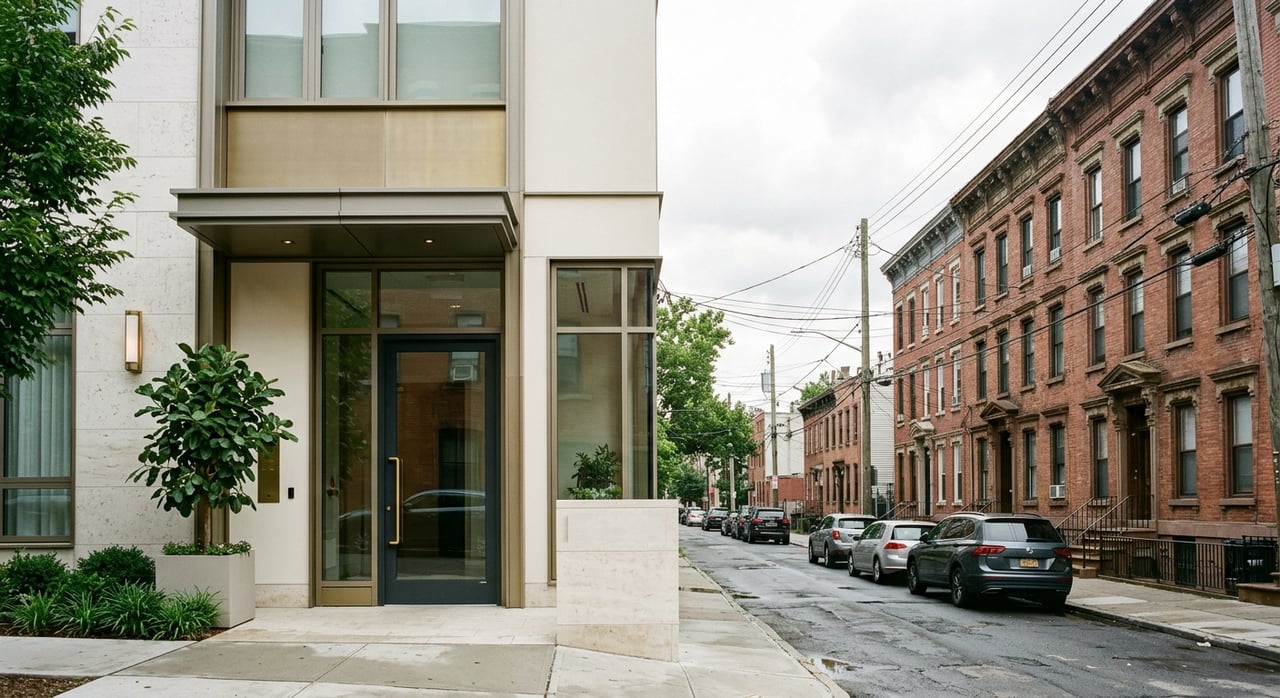
For many buyers, the clearest comparison is not just “Seaport versus Southie.” It is waterfront towers and amenity buildings versus interior side streets and more traditional residential blocks, including areas like City Point and Telegraph Hill.
Price Differences Are Real
The South Boston Waterfront does carry a price premium, but the gap is not always as dramatic as buyers expect. Current listing data from Realtor.com shows a median listing price of $1.295 million in the South Boston Waterfront, compared with $1.165 million in South Boston overall.
Price per square foot shows a wider difference. Realtor.com reports $1,092 per square foot in the waterfront versus $941 per square foot in South Boston overall, with lower median listing prices in subareas like City Point at $1.087 million, Telegraph Hill at $997,000, and Columbus Park and Andrew Square at $925,000.
Recent sale data suggests the realized pricing gap may be narrower than list prices imply. Redfin reports a March 2026 median sale price of $1.095 million for South Boston Waterfront and $1.05 million for South Boston.
That matters if you are trying to decide whether the waterfront premium is worth it. In simple terms, sellers may ask more for waterfront product, but the final sale spread appears tighter based on recent closed sales.
Housing Stock Feels Very Different
One of the biggest differences is the kind of home you are likely to find. The waterfront skews heavily toward newer construction and smaller-unit living.
Boston planning data for 2025 shows that 65.7% of South Boston Waterfront homes are studios or one-bedrooms, while only 5.1% are three-bedroom-plus units. The area is also more renter-heavy, with 63.5% renter-occupied units and 23.8% owner-occupied units.
South Boston proper offers a more balanced housing mix. City data shows 44.6% of units are two-bedrooms and 30.0% are three-bedrooms or larger, with 50.2% renter-occupied and 46.0% owner-occupied.
For you as a buyer, that often translates into a practical choice. If you want a sleek newer condo, concierge-style amenities, and a lower-maintenance layout, the waterfront may fit. If you want more square footage, more room flexibility, or a home in a more established residential setting, the side streets may offer more options.
Daily Lifestyle Is a Major Tradeoff
The South Boston Waterfront has a more urban, event-driven rhythm. Boston planning materials specifically note the area’s major venues, convention activity, seasonal pop-ups, cultural institutions, and visitor-oriented uses.
That can be a plus if you want energy and convenience close by. It can also be a real tradeoff if you are sensitive to crowds, deliveries, event traffic, or heavier street activity at certain times.
The side streets of South Boston tend to feel more residential. That does not mean they are quiet in every location or that they avoid density, but the overall character is more rooted in neighborhood blocks than in a large-scale mixed-use district.
This is where your personal buying criteria matters most. A building with strong amenities and a polished lobby may feel like the right fit for one buyer, while another buyer may value a traditional street, more separation from event traffic, and a stronger owner-occupant feel.
Parking Can Shape Your Decision
Parking deserves more attention than many buyers give it at the start. In both areas, parking is regulated, and in South Boston specifically, there is an important local constraint.
Boston’s South Boston parking freeze caps off-street parking, and the city’s resident parking program uses permit-based access on many streets. That means your parking strategy should be part of your search criteria from day one.
City data also shows that 72.9% of households in South Boston proper have vehicles, compared with 56.4% in the waterfront. While that does not tell the whole story, it does suggest stronger parking pressure on interior South Boston streets.
If you need a car, ask detailed questions before you make an offer:
- Is parking deeded, rented, or included?
- Are there separate monthly parking costs?
- Are there building rules that affect parking use or transfer?
- If there is no off-street parking, what does resident permit parking realistically look like nearby?
On the waterfront, newer buildings may package parking in different ways. On the side streets, street parking limits and permit rules can make a major difference in daily convenience.
Appreciation Potential Comes With Different Risks
The waterfront has the stronger growth story on paper. Boston planning data shows the South Boston Waterfront population grew 195% from 2010 to 2020, while housing units grew 327% over the same period.
The city also continues to plan transportation and public realm improvements tied to Seaport access and a more complete 24-hour district. For buyers who prioritize long-term neighborhood growth, that ongoing investment may be part of the appeal.
At the same time, the waterfront carries greater climate exposure. Boston’s coastal resilience planning states that flooding from storms and high tides is expected to increase over time with sea-level rise, and the city’s South Boston resilience work specifically includes the waterfront area from Fort Point Channel to Moakley Park.
The city also notes that filled land in areas such as the Seaport is especially vulnerable to coastal flooding. That does not mean you should rule out the waterfront, but it does mean resilience planning, building systems, flood exposure, and insurance-related uncertainty deserve closer review.
The side streets may appeal more to buyers who want steadier end-user demand and a more established residential base. That is not a guarantee of future performance, but it is a reasonable takeaway from the area’s housing mix, owner-occupancy levels, and neighborhood character.
Which Buyer Fits Each Option
If you are deciding between the two, it helps to frame the choice around your daily life and not just the listing photos.
Waterfront May Fit You Better
The South Boston Waterfront may be the stronger fit if you are looking for:
- Newer construction
- Amenity-rich buildings
- Smaller, efficient layouts
- A polished urban feel
- Easy access to major commercial and event hubs
- A neighborhood with a strong ongoing development story
Side Streets May Fit You Better
The side streets of South Boston may be the better fit if you are looking for:
- A more established residential setting
- Larger two-bedroom or three-bedroom layouts
- A stronger owner-occupant presence
- Fewer waterfront-specific event and crowd tradeoffs
- More traditional neighborhood blocks and housing character
- Less direct exposure to waterfront climate concerns
How to Compare the Right Way
When buyers compare these two areas, the mistake is often focusing only on headline price. A better approach is to compare value in context.
Think about what matters most to you over the next five to seven years. Your ideal fit may depend on layout needs, tolerance for activity, parking requirements, building style, and how much weight you place on long-term climate exposure versus newer construction and amenities.
A smart search usually starts with a short list of non-negotiables, such as square footage, parking, building age, monthly costs, and day-to-day setting. From there, it becomes much easier to decide whether the waterfront premium is buying you meaningful lifestyle value or simply a different product type.
If you want help weighing South Boston Waterfront condos against side-street options in South Boston, Mike Preston can help you compare the numbers, the block-by-block feel, and the practical tradeoffs so you can move forward with clarity.
FAQs
What is the main difference between South Boston Waterfront and South Boston side streets?
- The waterfront is a newer mixed-use district with more event activity, newer buildings, and smaller units, while the side streets of South Boston generally offer a more established residential feel with larger layouts and a stronger owner-occupant presence.
Is South Boston Waterfront more expensive than South Boston side streets?
- Yes, current listing data shows a higher median listing price and price per square foot in the South Boston Waterfront, although recent sale data suggests the closed-sale gap is smaller than the listing gap.
Are condos in South Boston Waterfront usually smaller?
- Yes, Boston planning data shows the waterfront has a heavy concentration of studios and one-bedrooms, while South Boston proper has more two-bedroom and three-bedroom-plus homes.
Is parking harder in South Boston side streets or the waterfront?
- Parking can be challenging in both areas, but South Boston proper may face stronger street-parking pressure because more households have vehicles and many streets rely on resident permit rules.
Does South Boston Waterfront have more climate risk?
- Boston’s coastal resilience planning indicates that flooding from storms and high tides is expected to increase over time with sea-level rise, and the waterfront is part of the city’s resilience planning area.
Which area is better for a buyer who wants a neighborhood feel in South Boston?
- Buyers who want a more established residential setting often prefer side-street areas of South Boston because of the housing mix, owner-occupancy balance, and overall neighborhood character.